
- Arcouzan 2026: the glacier is holding firm
- Arcouzan 2026: the glacier is holding firm
- Arcouzan 2026: the glacier is holding firm
- Arcouzan 2026: the glacier is holding firm
- Arcouzan 2026: the glacier is holding firm
Arcouzan 2026: the glacier is holding firm
Arcouzan 2026: the glacier is holding firm
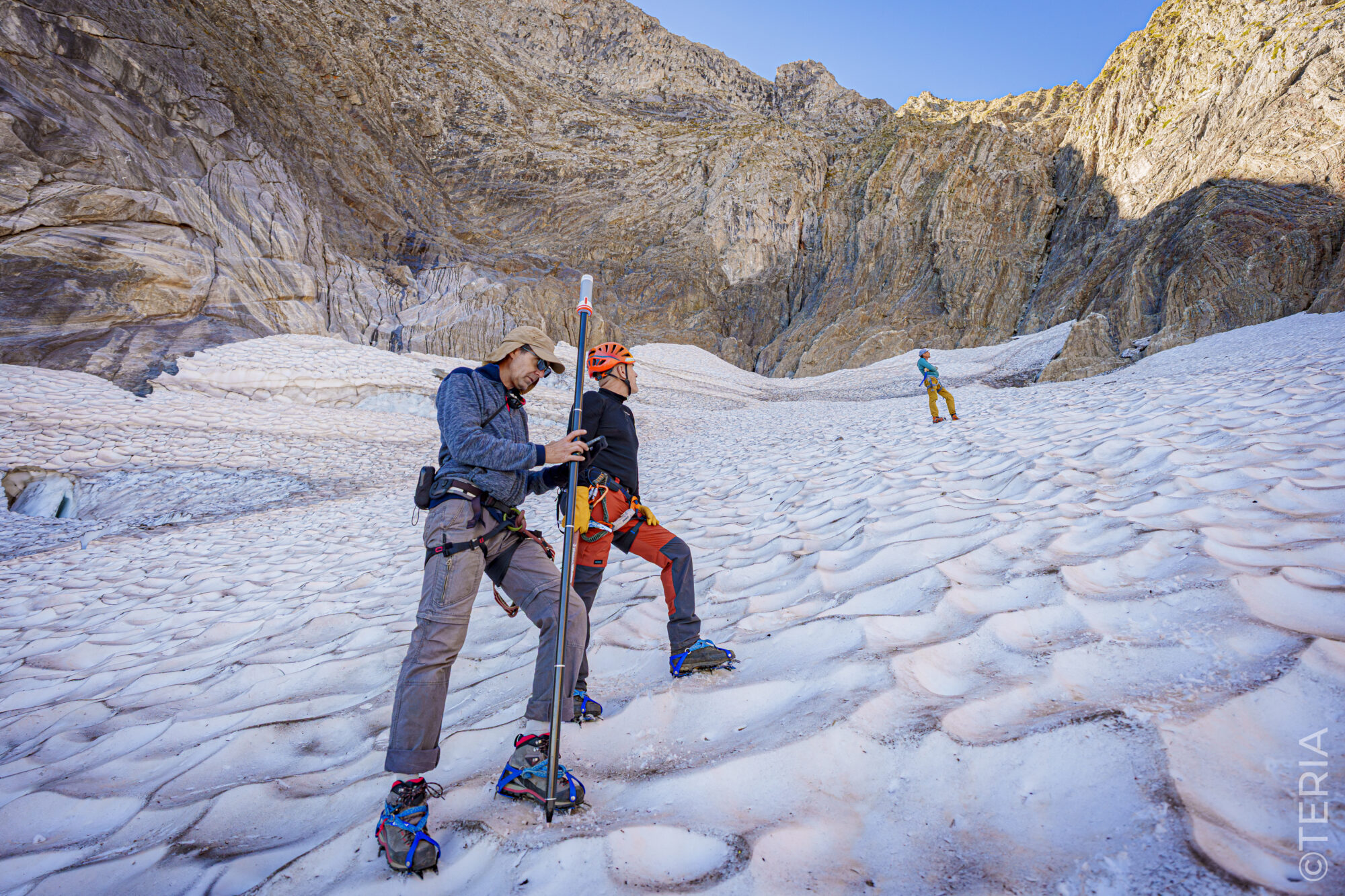
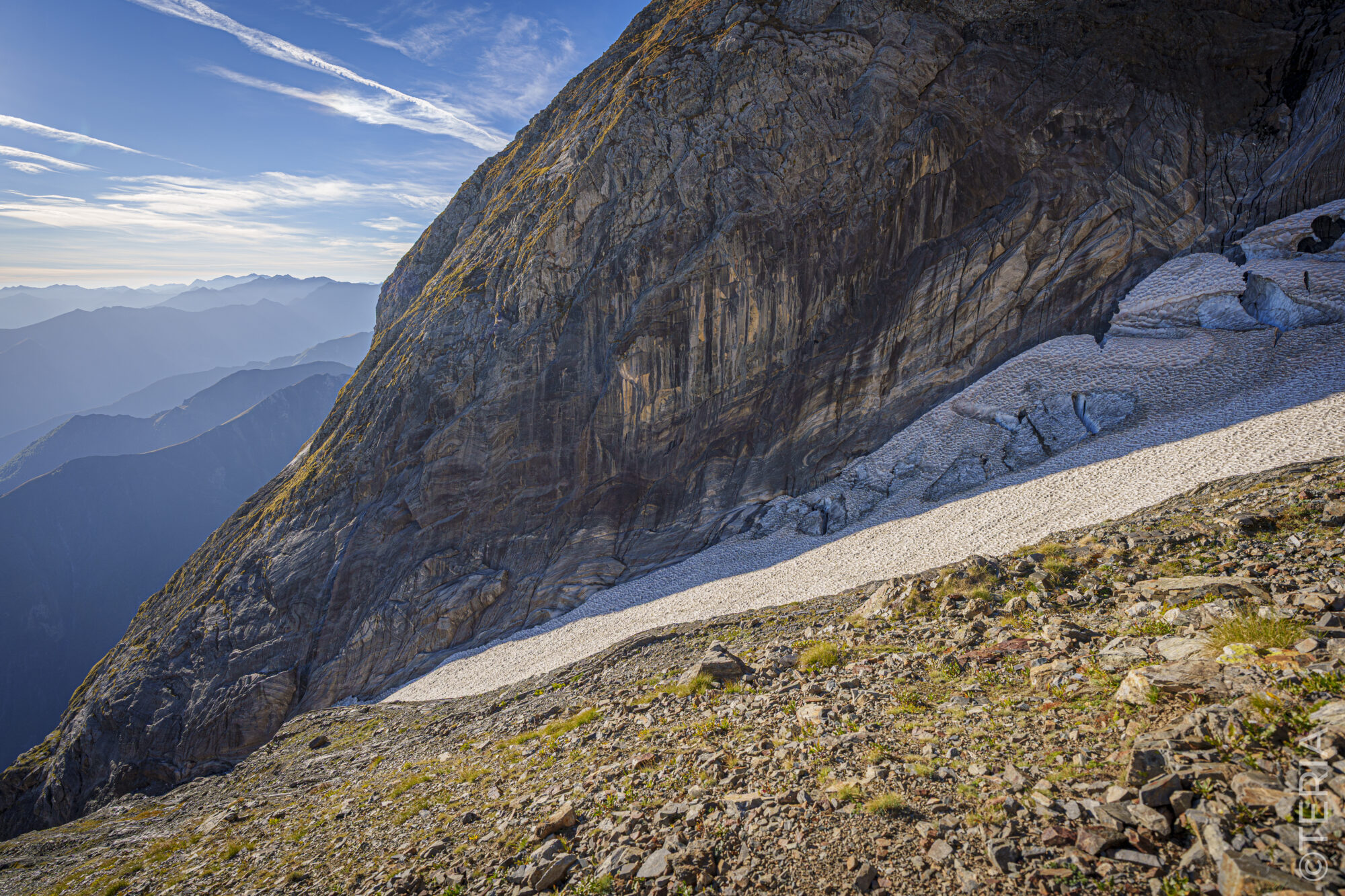
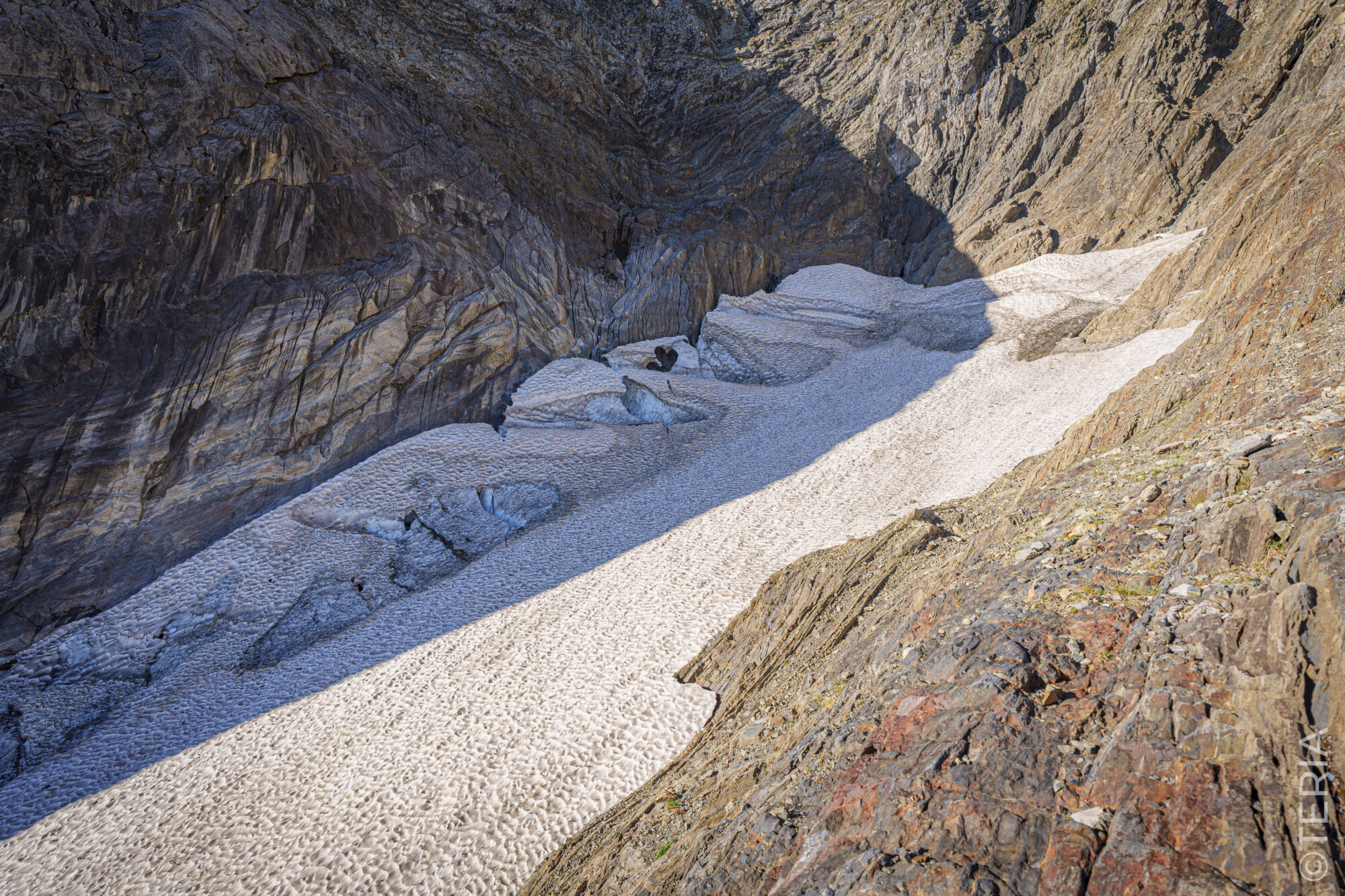
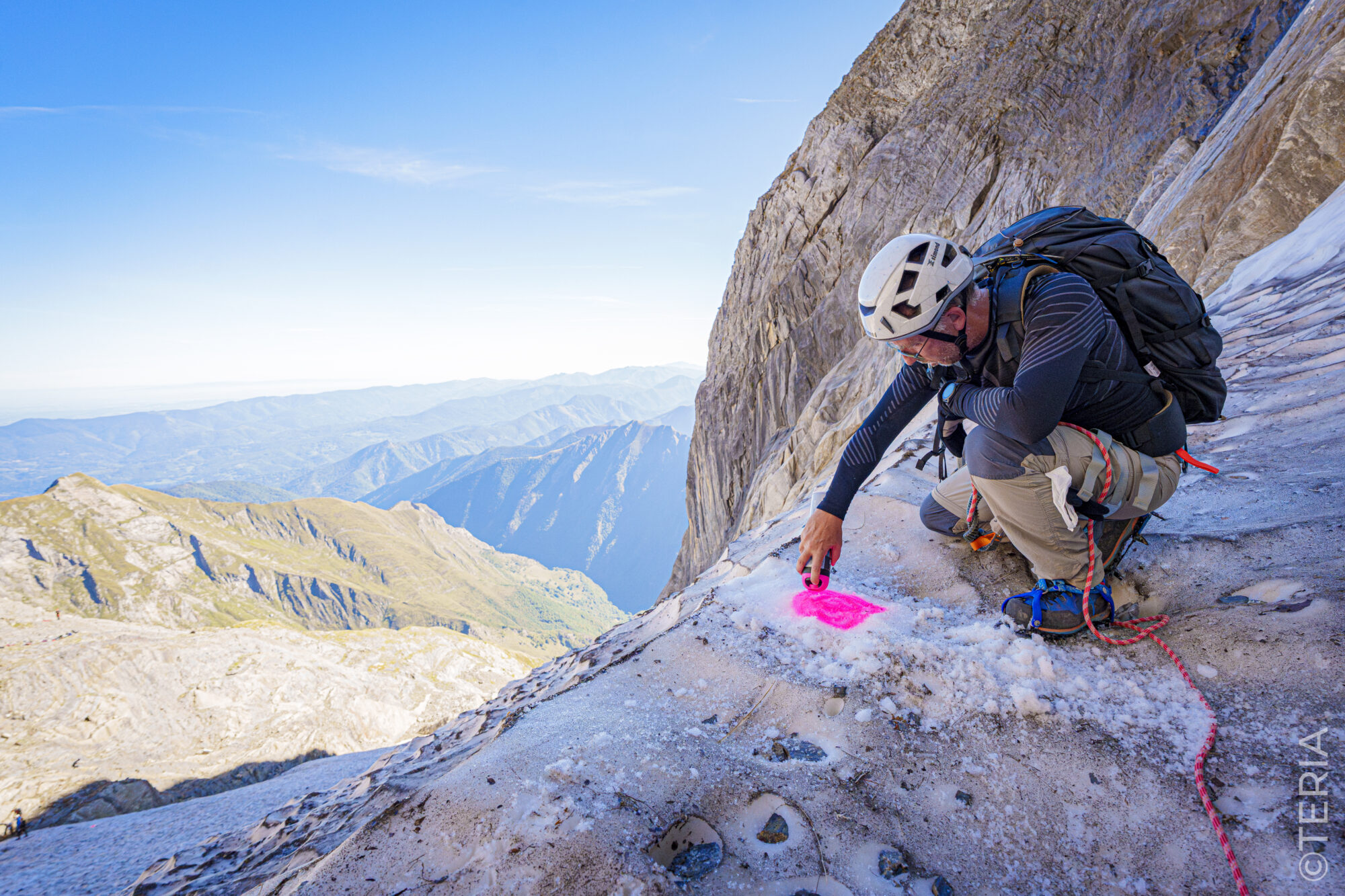
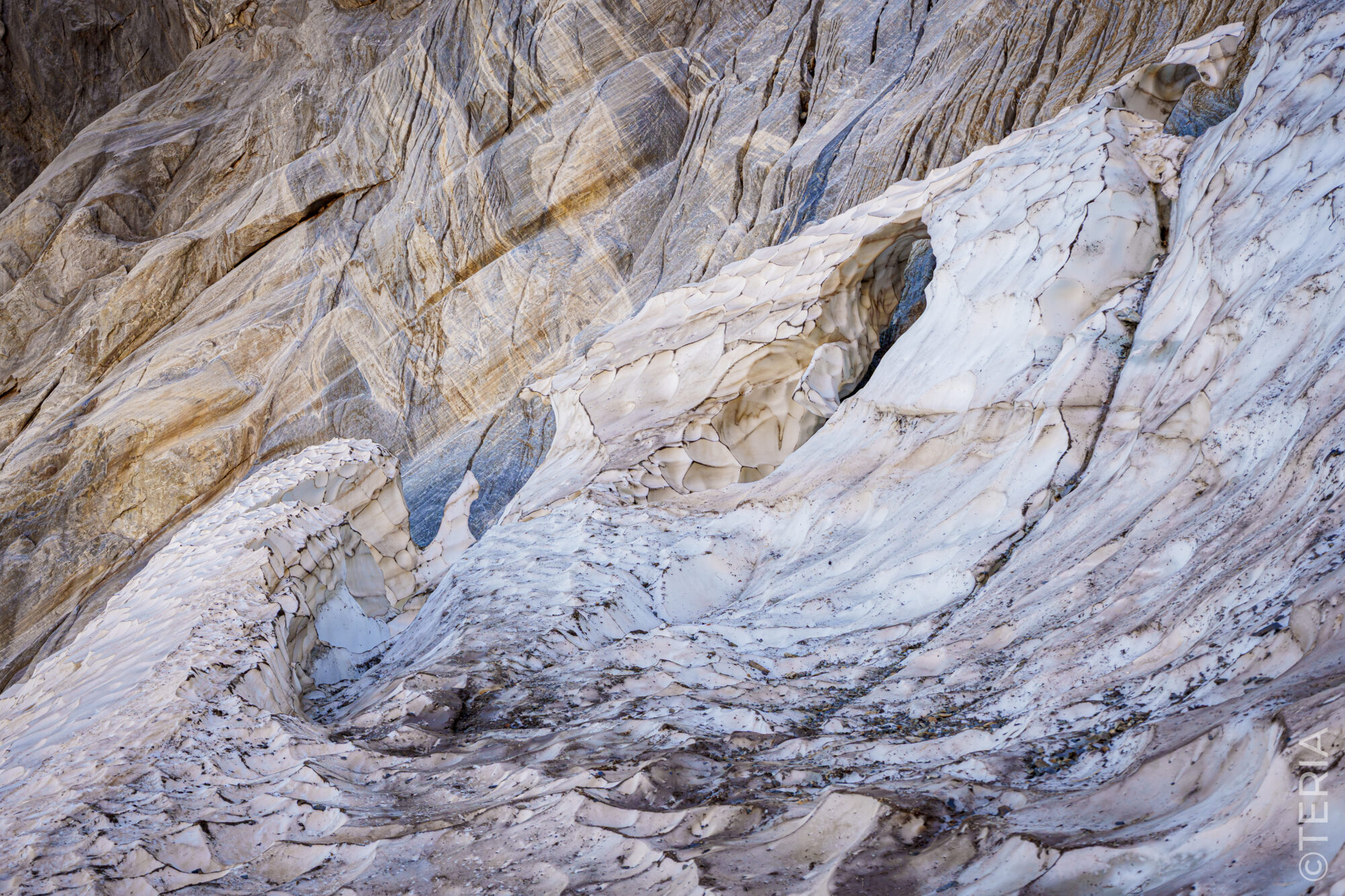
On 25 and 26 September 2026, we made our way back up to the foot of the north face of Mont Valier for a new survey of the Arcouzan glacier. After the scorching summer we’d just been through, we were expecting the worst. Surprise: the glacier is still there, and looking rather healthy.
TERIA was out in the field. Here’s our report.
A multidisciplinary team
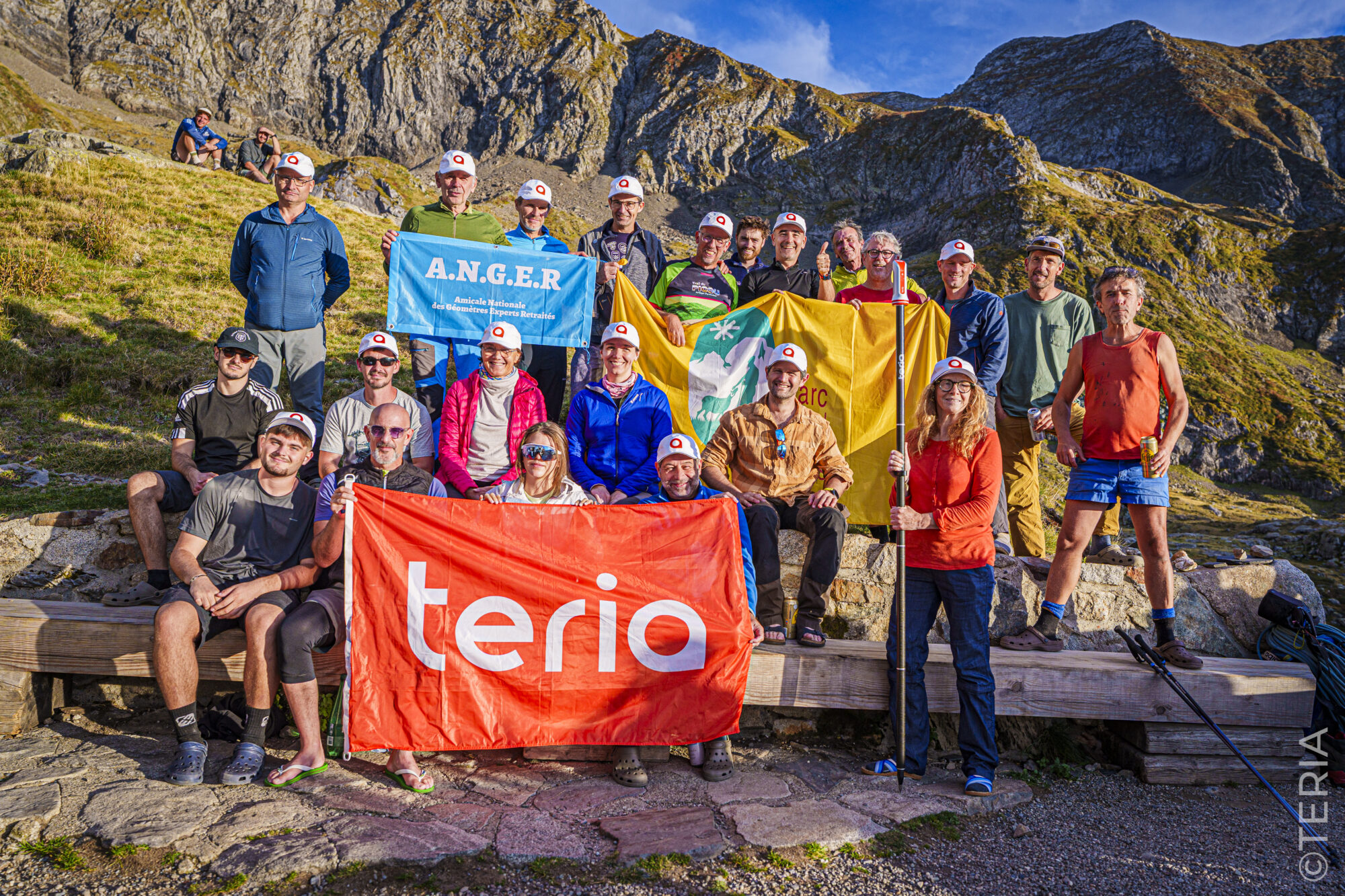
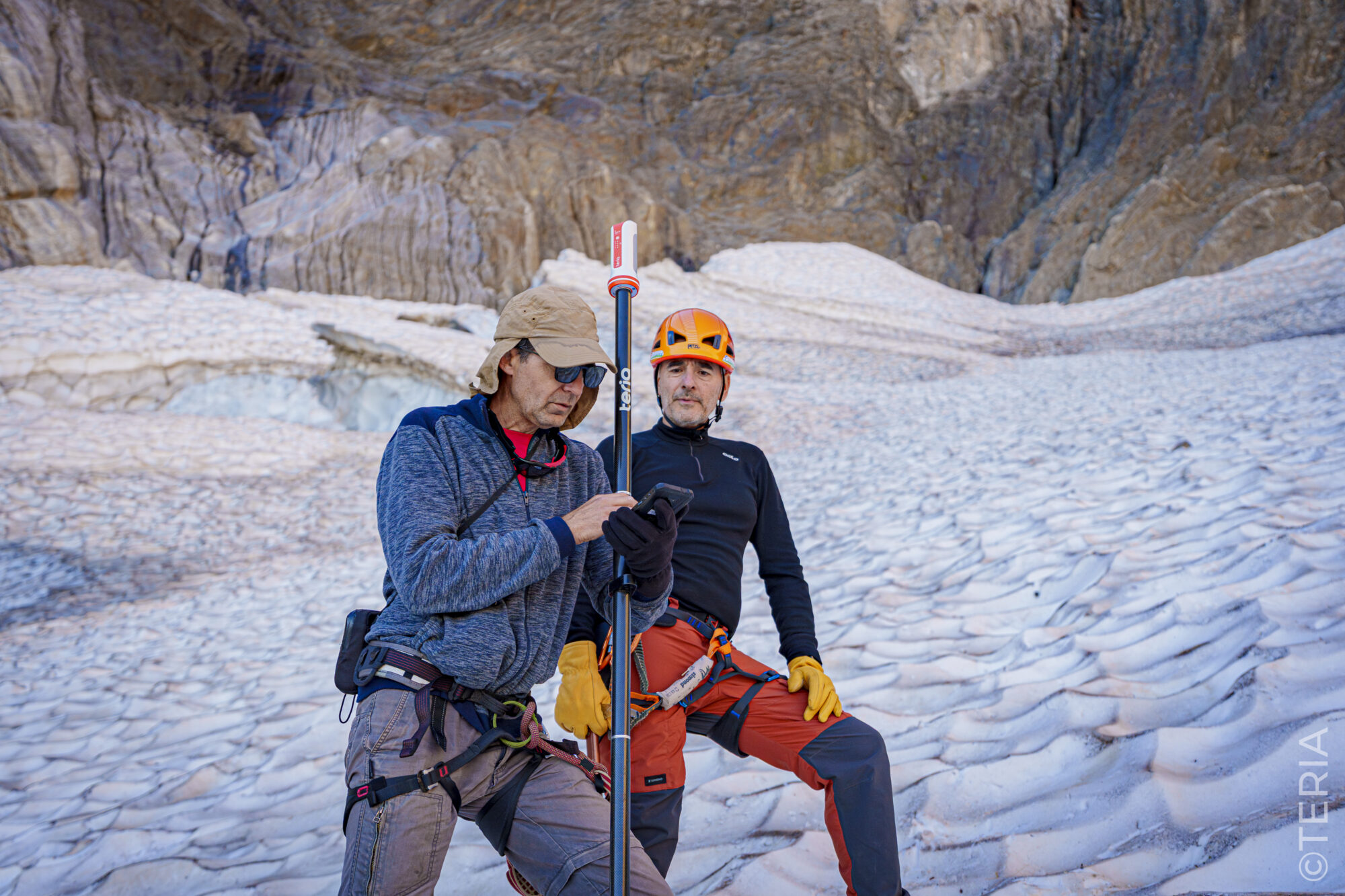
In the field, the team of chartered surveyors was led by Jean-Sébastien Rivère, who rallied his colleagues from the local UNGE to carry out this latest survey. A survey of this scale, at an altitude of 2,500 metres, relies first and foremost on these surveyors who, year after year, make the climb to the glacier’s head.
Working alongside them was the Lycée du Caousou (Toulouse), led by Philippe Sablayrolles, a stalwart of the expedition since 2011. This year, his teams took charge of the drone, proving that the next generation of surveyors is equally capable of working in high-mountain conditions.
In our last article, its surface area had shrunk to 14,900 m², and the ice had trapped a rucksack there since 1986. The campaign planned for September 2025 could not go ahead due to unfavourable weather conditions. Three years on, Arcouzan had a completely different surprise in store for us.
From Mont Blanc to Arcouzan,
the same lesson
the same lesson
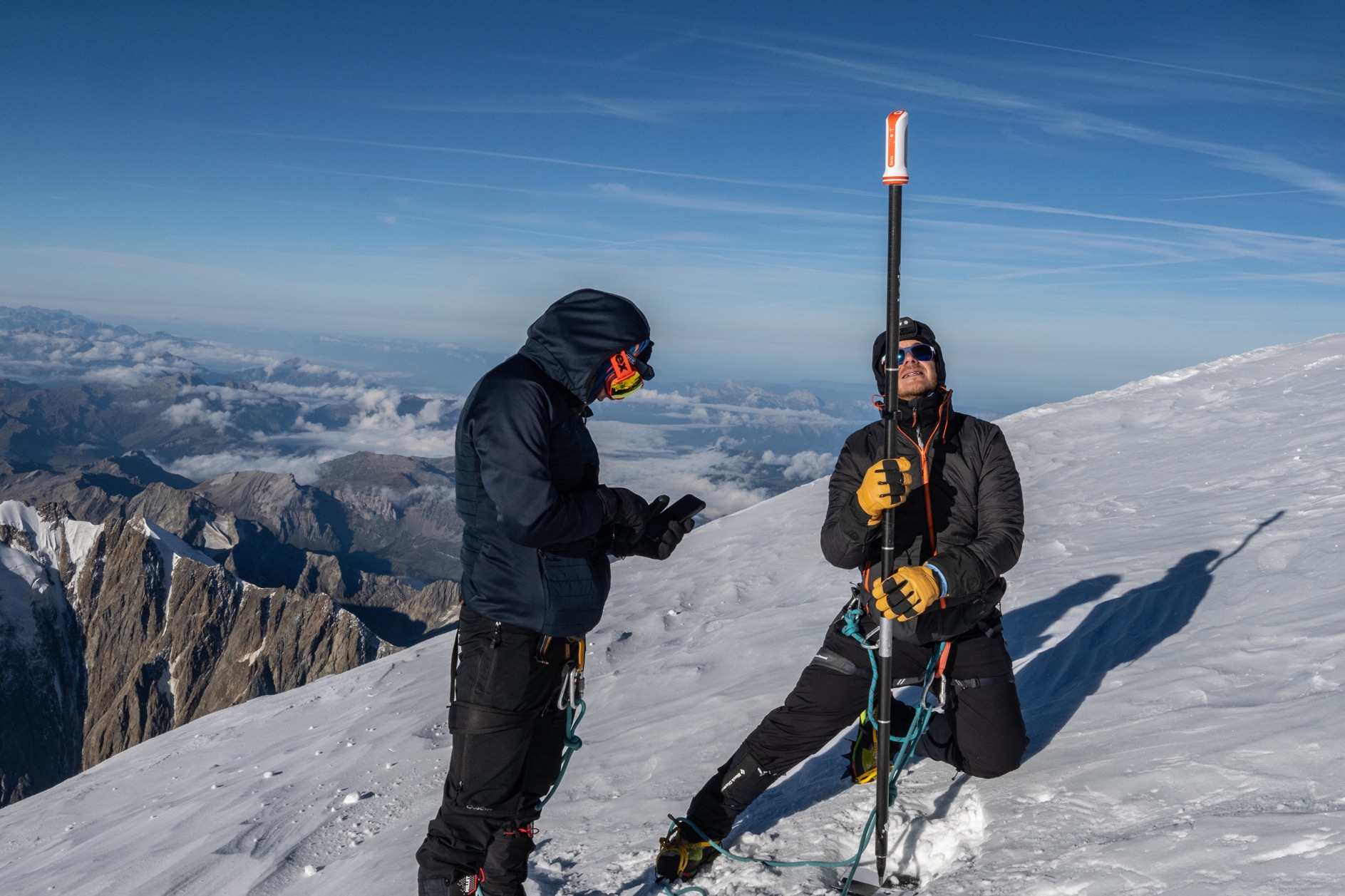
A few weeks ago, we were at the summit of Mont Blanc with the chartered surveyors. On 14 October, the new altitude was announced: 4,807.47 m, which is 1.88 m higher than in 2023.
Up there, we learnt one thing: an ice cap is a living entity. It replenishes itself, settles and shifts with the weather. A single measurement doesn’t tell us much; it’s the series of measurements that is valuable. Arcouzan reminds us of this today, some 2,300 metres lower down.
Whether on Mont Blanc or in Ariège, our role remains the same: to provide centimetre-level precision where it serves the pursuit of knowledge. This is the essence of our commitment as a mission-driven organisation since 2021, and of the monitoring of Arcouzan that TERIA has been carrying out with chartered surveyors since 2011. The surveyors take measurements with rigour and over the long term. It is up to the glaciologists to interpret them.
A glacier that has withstood the summer
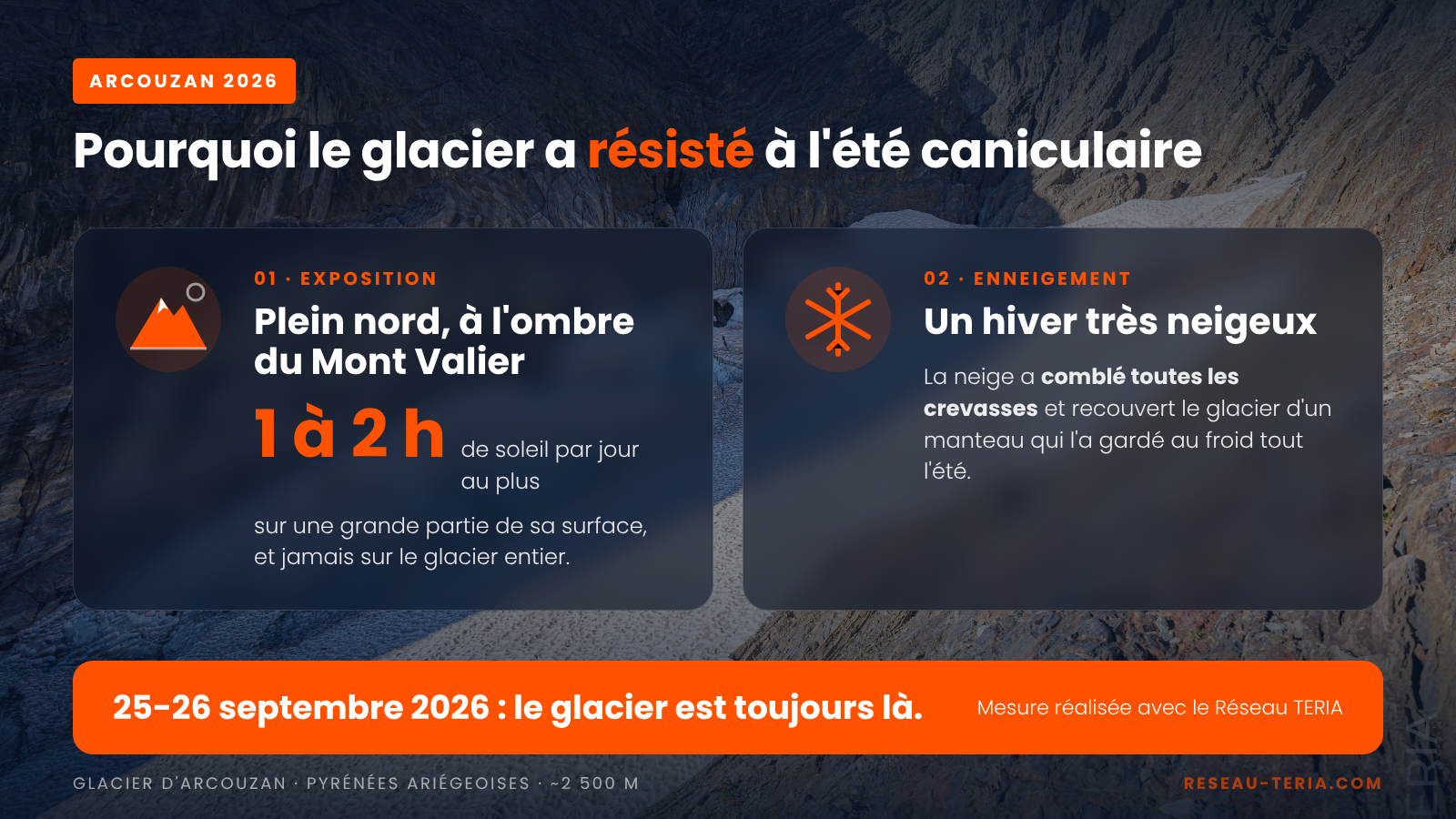
After a summer like that, the glacier could well have disappeared. Yet this is not the case, and there are two main reasons for this.
A shaded location. Nestled at the foot of the north face of Mont Valier, the Arcouzan sees very little sun: one to two hours a day at most across much of its surface, and never all of it at once. Tucked between the rock faces, it is also sheltered from the wind, and benefits from the snow sliding down from the north face – a supply that replenishes it every winter.
A winter blanket. It was a very snowy winter. The snow filled all the crevasses and covered the glacier with a thick blanket, which kept it cold throughout the summer. This blanket acts as a shield: fresh snow reflects up to 90 per cent of solar radiation, whilst bare ice often reflects less than 40 per cent. As long as there is snow, it is the snow that melts, not the ice.
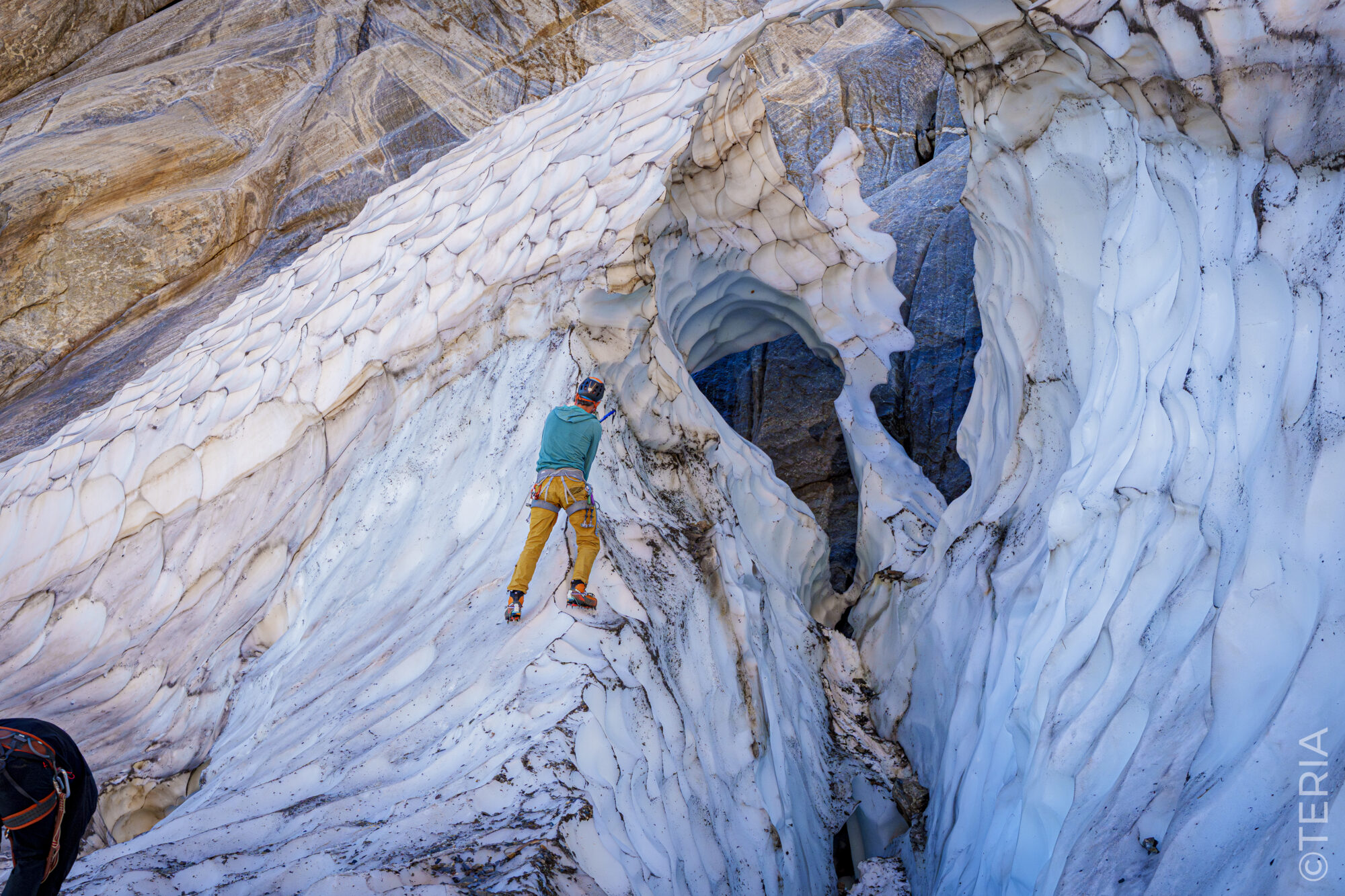
These advantages are nothing new: until the mid-2010s, they had even enabled the glacier to expand. But they do not make it invulnerable. Since 2016, the trend has been downward, and in 2021 a tunnel carved out by warm air currents had penetrated deep into the heart of the ice.
The return of the drone,
using RTK this time
using RTK this time
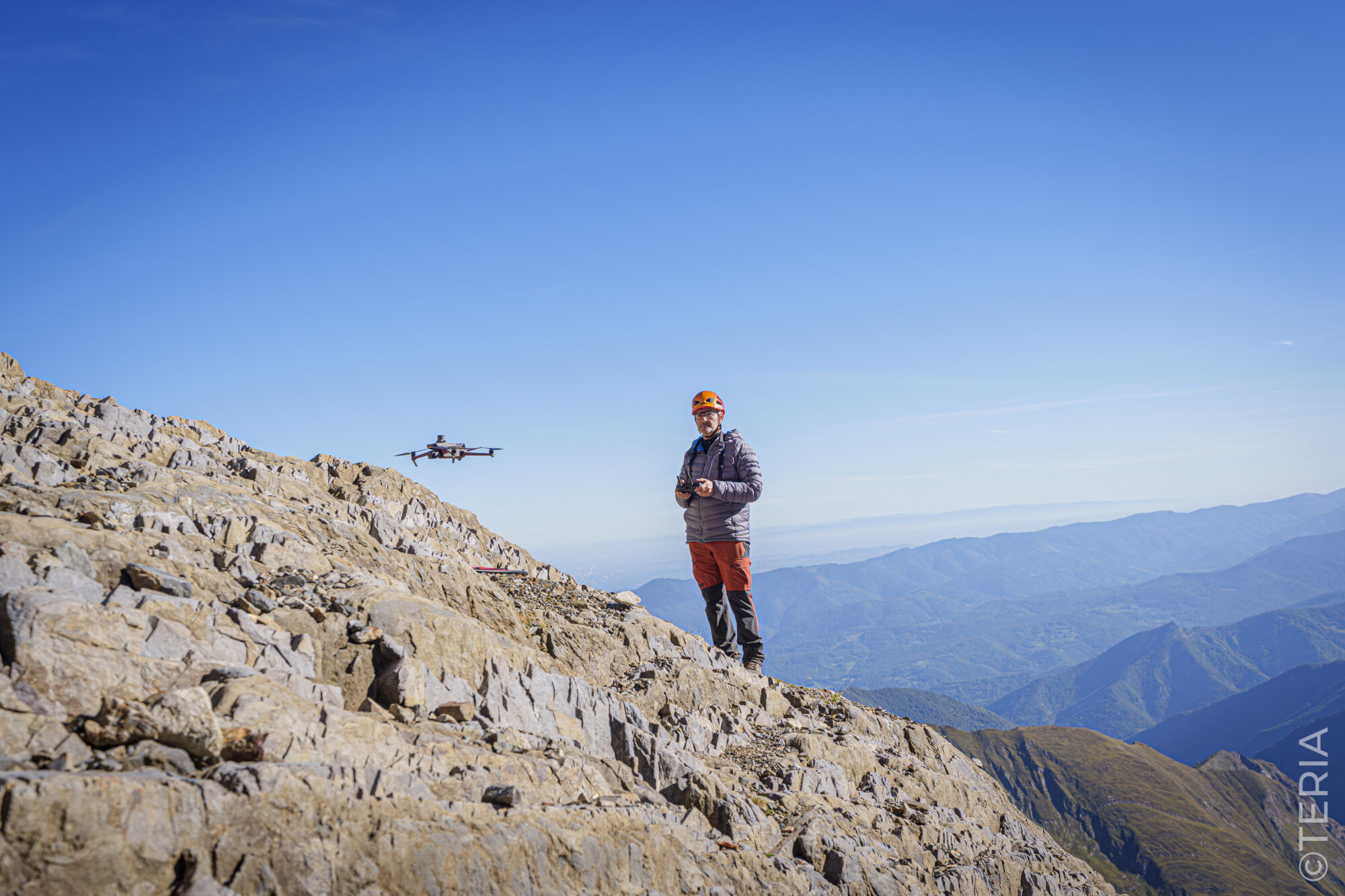
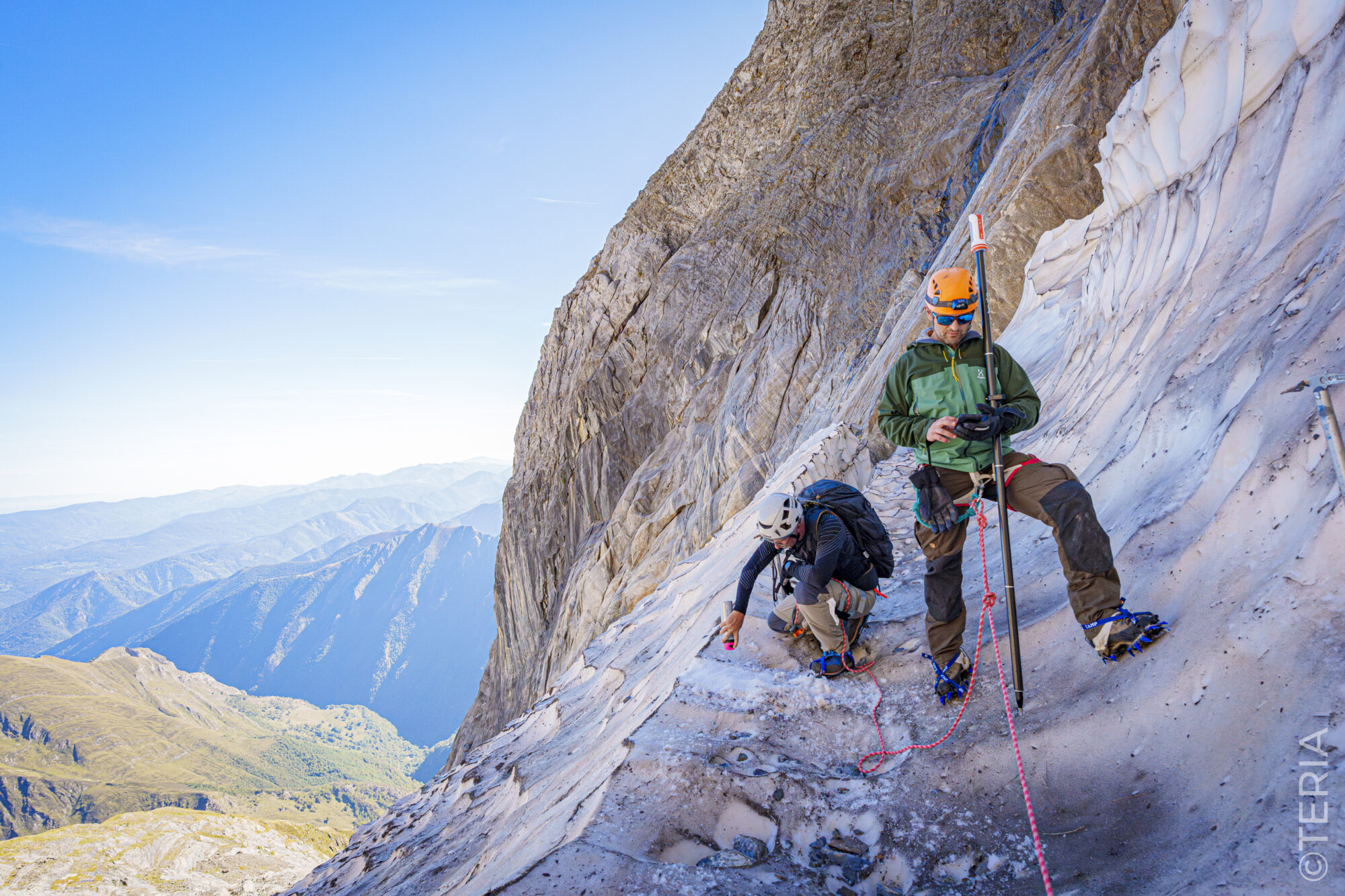
For the first time in a long while, the glacier has been surveyed using a drone. This time, an RTK drone was used, connected in real time to the TERIA network to pinpoint the location of each image to the nearest centimetre. The Caousou teams were at the controls. Drone surveying saves valuable time in the field and provides a 3D mesh model of the glacier.
However, in mountainous conditions, an RTK drone is not always sufficient. Ground-based measurements taken with the PYX-i therefore help to refine the model. This is the approach that has proven its worth on Mont Blanc: targets measured with the PYX-i there improved the accuracy of the 3D model of the summit by 55 cm.
The year 2026 is taking its time to arrive
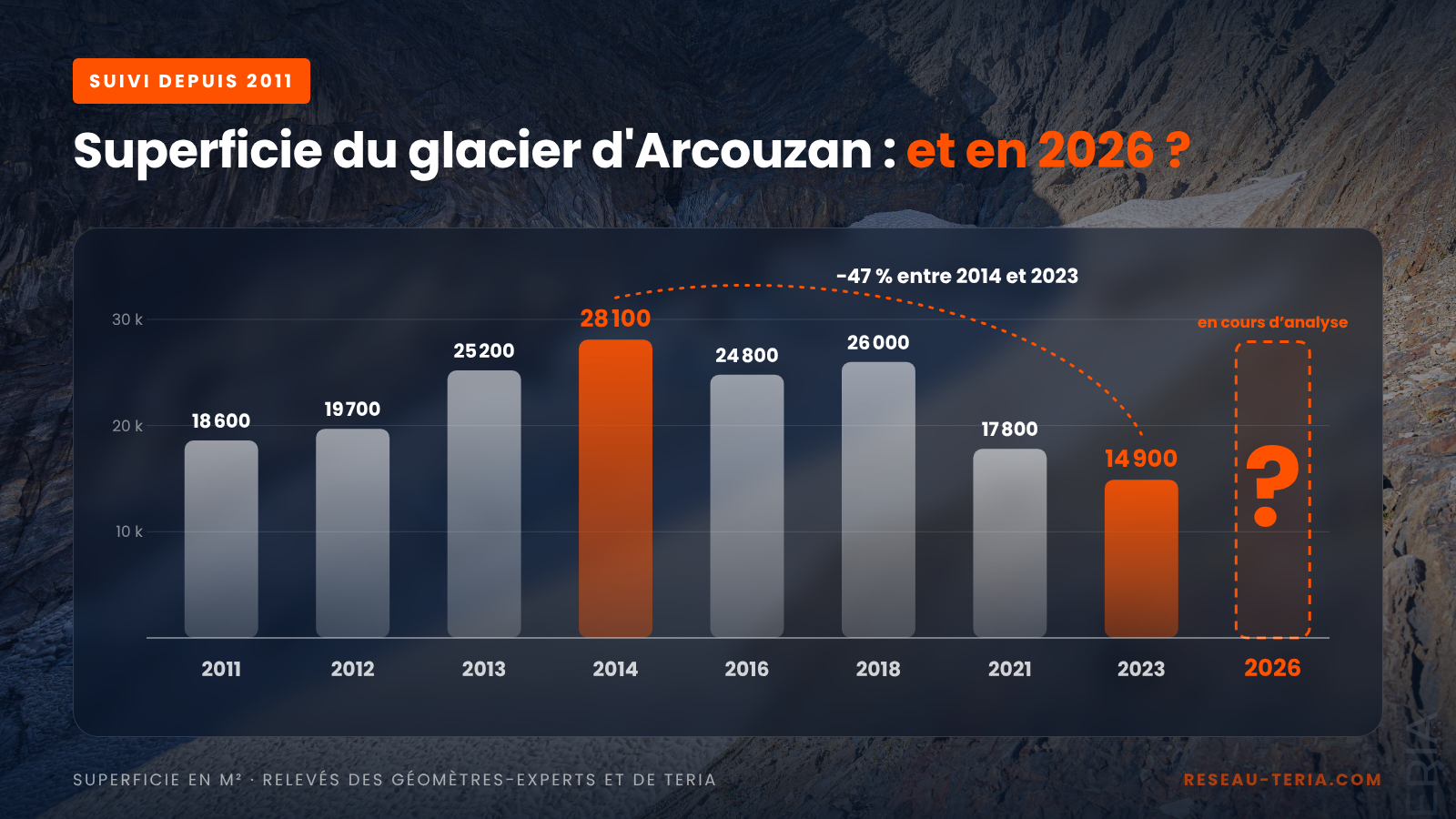
After peaking at 28,100 m² in 2014, the glacier’s area fell to 14,900 m² in 2023. As the 2025 survey was cancelled due to weather conditions, no further measurements have been added to the series since then. For 2026, the data is currently being processed: we will publish the figure as soon as it has been finalised.
One thing is certain: this year, the visible surface area does not tell the whole story. The snow covering the glacier can make it appear healthy, whilst it continues to lose ice at depth.
What now?
The glacier has held firm, but it is too early to speak of a respite. The snowpack that has protected it also conceals the ice: it is difficult to tell whether its thickness has increased, remained stable or continued to melt. Measuring the actual changes in the ice across the entire glacier remains complicated this year.
Three avenues for the future:
- The next field campaign, to determine whether 2026 is a blip or a genuine change in trend.
- Discussions with local glaciologists to interpret these measurements and cross-reference them with their observations.
- An expedition with ground-penetrating radar to finally see beneath the snow. On Mont Blanc, ground-penetrating radar positioned with centimetre accuracy by the TERIA network has this year enabled us to model the bedrock beneath 16 to 30 metres of ice. Why not Arcouzan?
The glacier is being measured by a team. Its history, however, is written over time.
Further reading
- Arcouzan: a melting glacier and a bag that’s emerging
- Mont Blanc 2026: 4,807.47 m
- TERIA, a mission-driven company
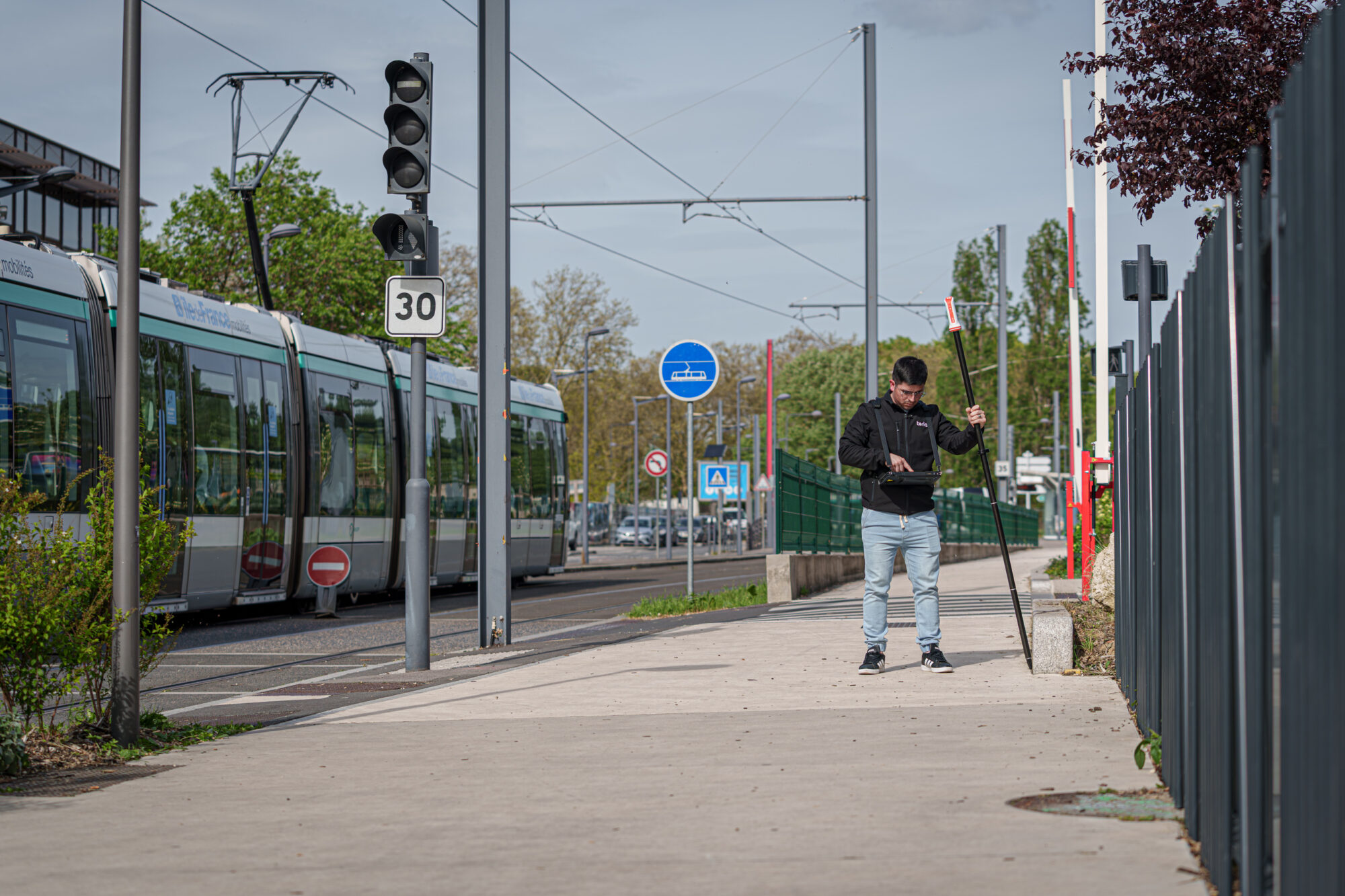
- PYX and PYX Inertial, the GNSS receivers used on the glacier

Did you enjoy this article?
Feel free to share it.